
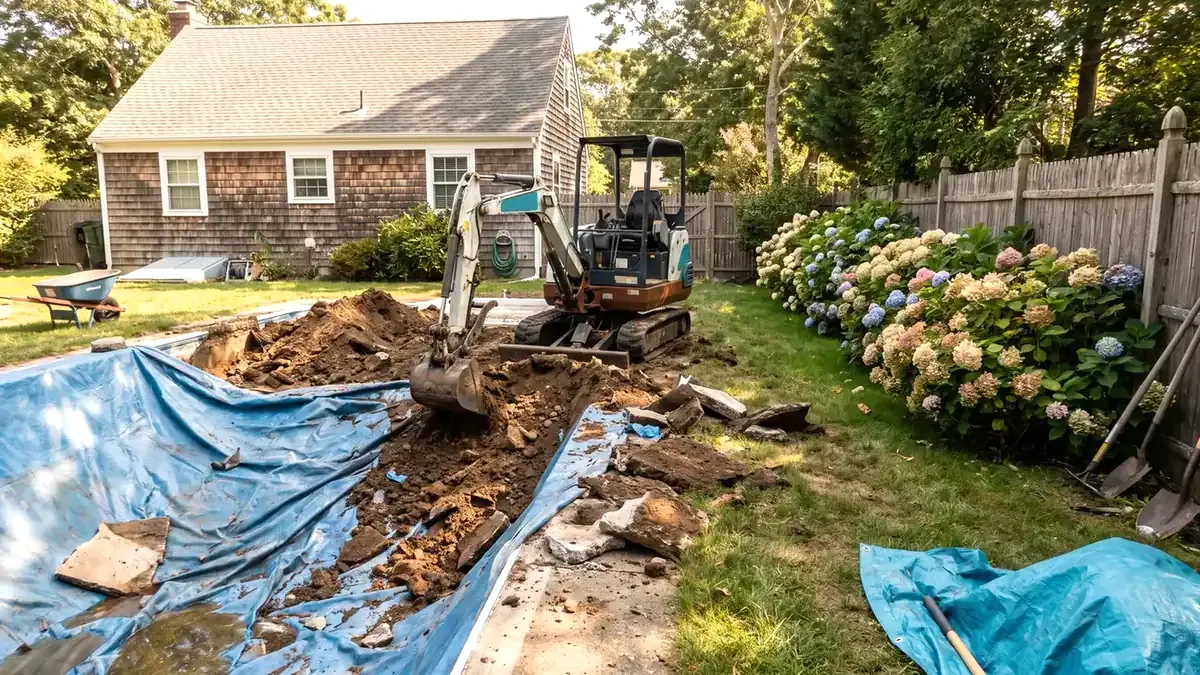
Pool removal in Massachusetts
Pool removal in Massachusetts starts with a local permit and an 811 call before digging; then a crew paid Massachusetts rates fills the pool in or takes it out.
- Concrete pool, filled in · 1–3 days
- $3,200–$13,000
- Concrete pool, taken out · 3–7 days
- $5,200–$20,700
US ranges from Angi, set for Massachusetts construction pay (BLS, May 2025); days from HomeAdvisor.
Pool removal cost calculator
What kind of pool is it?
Not sure? Touch the wall: soft and pressable is vinyl, slick and glossy is fiberglass, rough is concrete.
Last question
Fill it in, or take it all out?
Ready for pool removal in Massachusetts? A crew near you can take a look at your pool and hand you a written quote. Call now Your pool type affects the price and the work involved. Local rules matter, too. Either way, the crew is usually in and out of your yard within a week.
What does removal cost by pool type?
The starting point for these numbers is Angi's 2026 national ranges, adjusted for Massachusetts. Construction laborers here average $34.05 an hour, well above the $25.02 national figure, according to the Bureau of Labor Statistics.
| Kind of pool | What it costs in Massachusetts |
|---|---|
| Above ground, dismantled and hauled off | $625 to $3,250 |
| Vinyl liner, removed | $3,900 to $13,000 |
| Fiberglass shell, taken out | $6,500 up to $19,400 |
| Concrete or gunite, left in place and filled | $3,200 up to $13,000 |
| Concrete or gunite, fully removed | $5,200 to $20,700 |
With a fill in, the crew breaks up the pool bottom and fills the hole back in. With a full removal, the entire pool comes out. Expect the crew in your yard for 1 to 3 days on a fill in, or 3 to 7 days for a complete removal, per HomeAdvisor.
No two yards are alike, so what the crew finds on site shapes the final number. Call now to reach a pool demolition company near you. They'll ask a few questions about your pool and yard, set up a visit, and hand you a written estimate.
Permits and town rules
Every town writes its own rules, so yours may ask for something different than these examples.
Concord requires a permit to demolish a pool or spa. The crew has to break off a minimum of 18 inches around the top and punch at least six 12-inch holes through the bottom for drainage. The town's guidelines also spell out the inspections: natural resources where relevant, plus electrical, gas, the drainage holes, and the final grading.
Concord also dictates the fill. The whole bottom gets a foot of clean stone, with pieces no bigger than an inch. Easily compacted sand goes over that, stopping 30 inches short of the finished surface. Concrete broken from the pool can't go back in as fill.
In Sharon, the Board of Health says the water must drain to an approved spot. Every bit of pool material, concrete, fiberglass, liner, and rebar included, heads to a state-approved construction waste facility. Clean soil fills the hole, compacted so it won't settle later.
Where the pool water goes
The water's destination matters. Wellesley's illicit discharge regulations make it a violation to send water from a chlorinated pool or spa into the town's storm drains. Draining there also has to happen without creating a nuisance.
Dig Safe notice before digging
Before any digging, the crew has to mark the dig area and notify Dig Safe at least 72 hours ahead, not counting weekends and legal holidays, and no more than 30 days early, per the state law. Handling this falls to the excavator.
Each ticket stays good for 30 days only. If work will continue after the ticket expires, the excavator must request a new one before it expires, as the state's Dig Safe guide lays out.
Licenses your crew needs
Jobs on one- and two-family houses and their outbuildings need either a construction supervisor with a license or a design professional who is registered in charge. Homeowners get an exemption under the state building code, as the state's licensing page explains.
On top of that, anyone bidding on or doing contracting work on an existing home the owner lives in, with one to four units, has to be registered as a Home Improvement Contractor. That registration stands apart from the supervisor license, per the state's Home Improvement Contractor page.
Get your pool's price in writing
Your own price depends on your pool and yard, and one call settles it. Call now, and a company serving your area will ask a few questions, book a visit, and give you a written price.
Get a crew to look at your yard
The ranges tell you what is usual. Once a crew sees your pool, the access, and the fill, they will give you a real written quote.