
Pool fill in
With a pool fill in, or partial removal, the shell top gets broken off, drain holes get punched in the floor, and packed soil buries the rest.
- To fill in an in‑ground pool, US range
- $2,500–$10,000
US range from Angi.
- Crew time in the yard
- 1–3 days
- Packing the fill, often extra
- $250–$1,000
- Permit and inspection, often extra
- About $200
Prices from Angi; days from HomeAdvisor.
Filling in a pool vs. taking it all out: the cost
You have 2 options for getting rid of an in-ground pool. With a partial removal, workers break apart the upper section of the pool, keep the bottom shell buried, and fill the space. With a full removal, the entire shell gets broken up and taken away, then the hole gets filled.
| Job | Price | Time needed | Build there later? | Tell a buyer? |
|---|---|---|---|---|
| Partial removal, with the pool filled in | $2,500–$10,000 | 1–3 days | Usually not | Yes, part of the pool stays buried |
| Full removal of the whole pool | $4,000–$16,000 | 3–7 days | Often yes, with local approval | Show the permit and soil test |
These prices come from Angi, and the timelines come from HomeAdvisor. What workers earn varies by state, so what you pay locally may sit above or below these nationwide numbers.
Full removal can leave the site ready for future building, HomeAdvisor notes, but local rules still apply. It also boosts your property value more than a partial fill-in would, according to Angi.
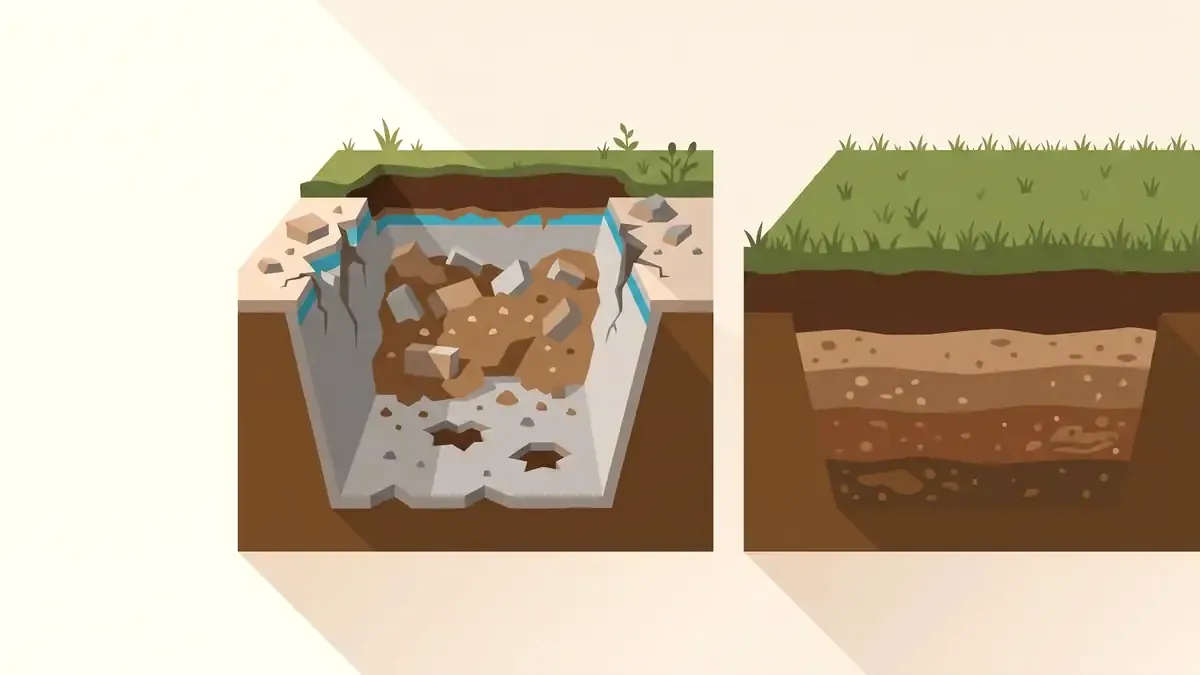
How a pool fill in is done, step by step
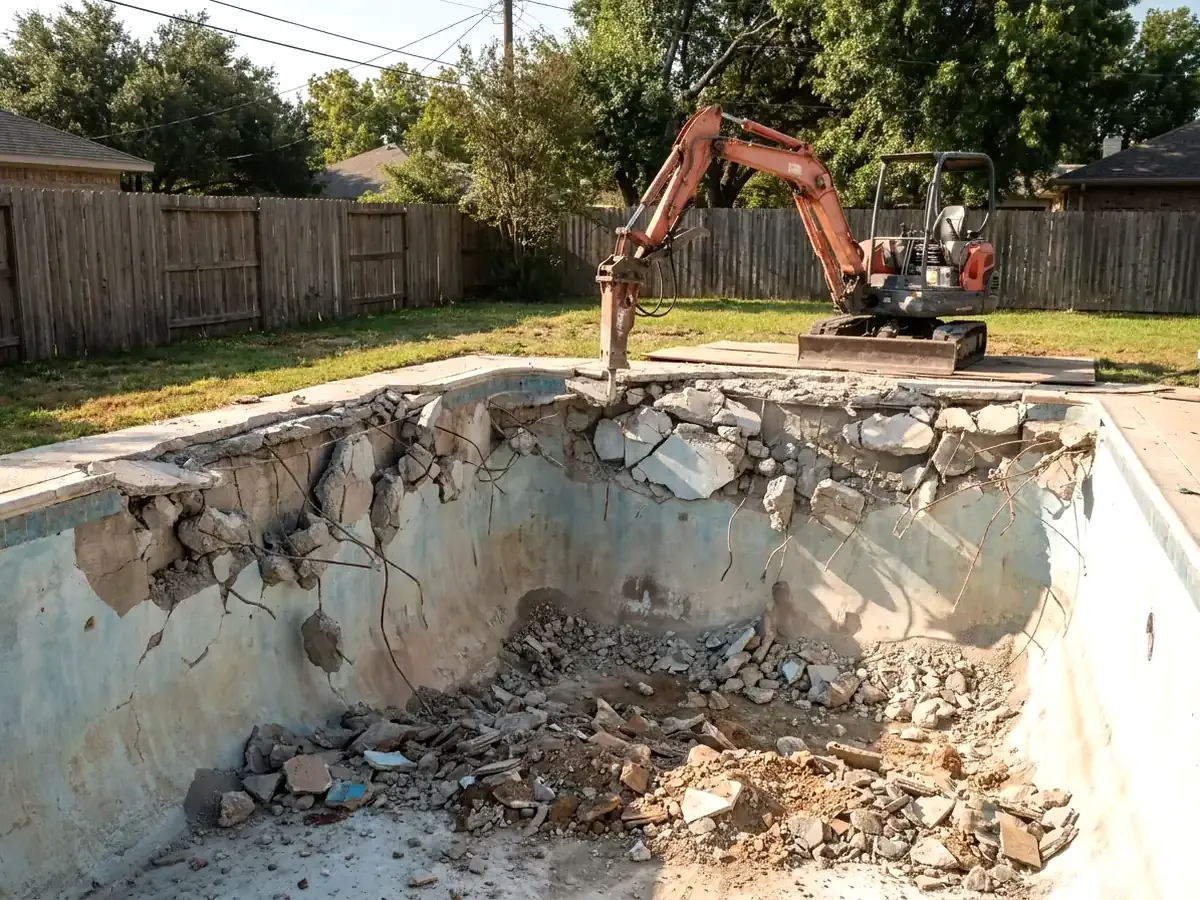
1. Break off the top
After draining the pool, the crew breaks off at least the top 18 inches of the walls.
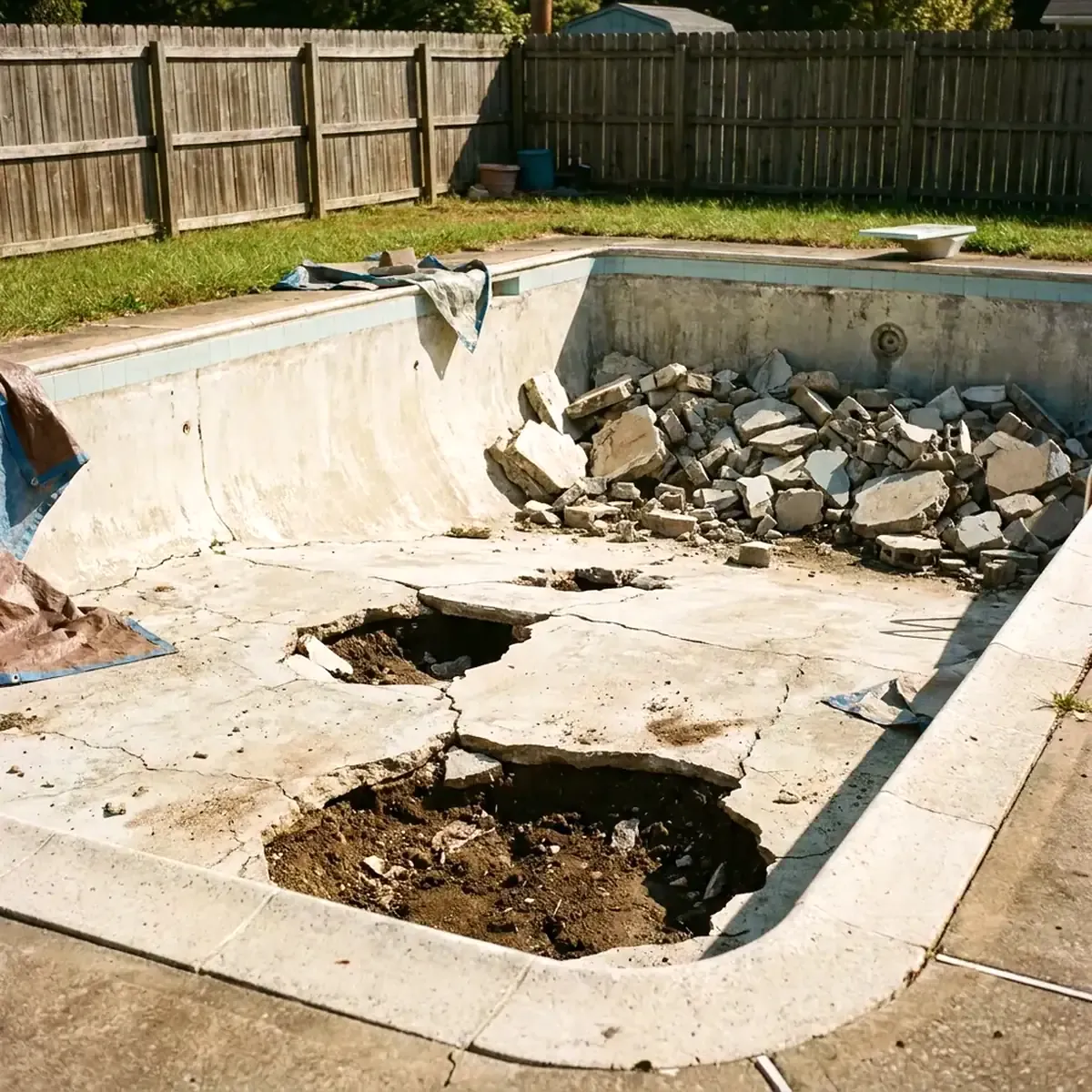
2. Punch drain holes
Holes through the floor let rain soak away rather than pool in the old shell.
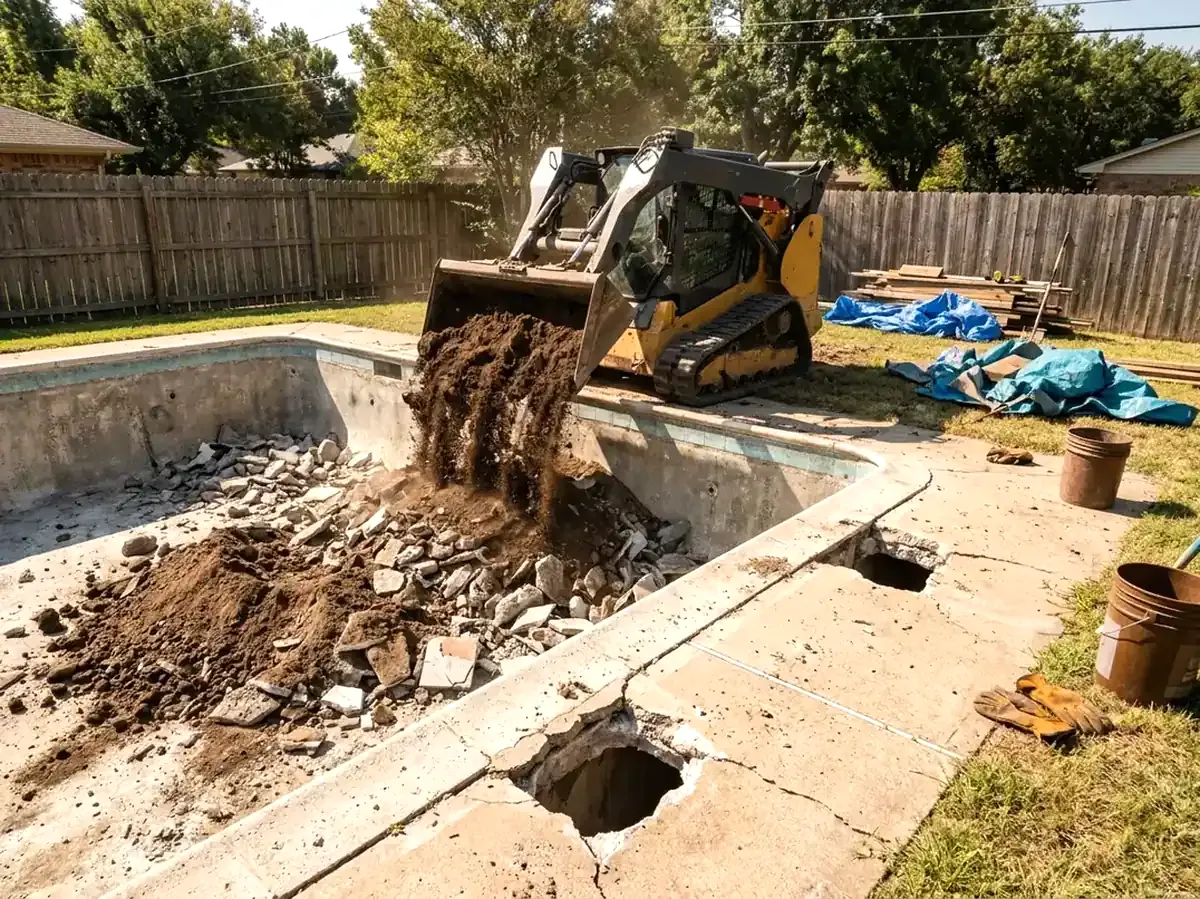
3. Fill the shell
Fill dirt and broken concrete go into the shell one layer at a time.
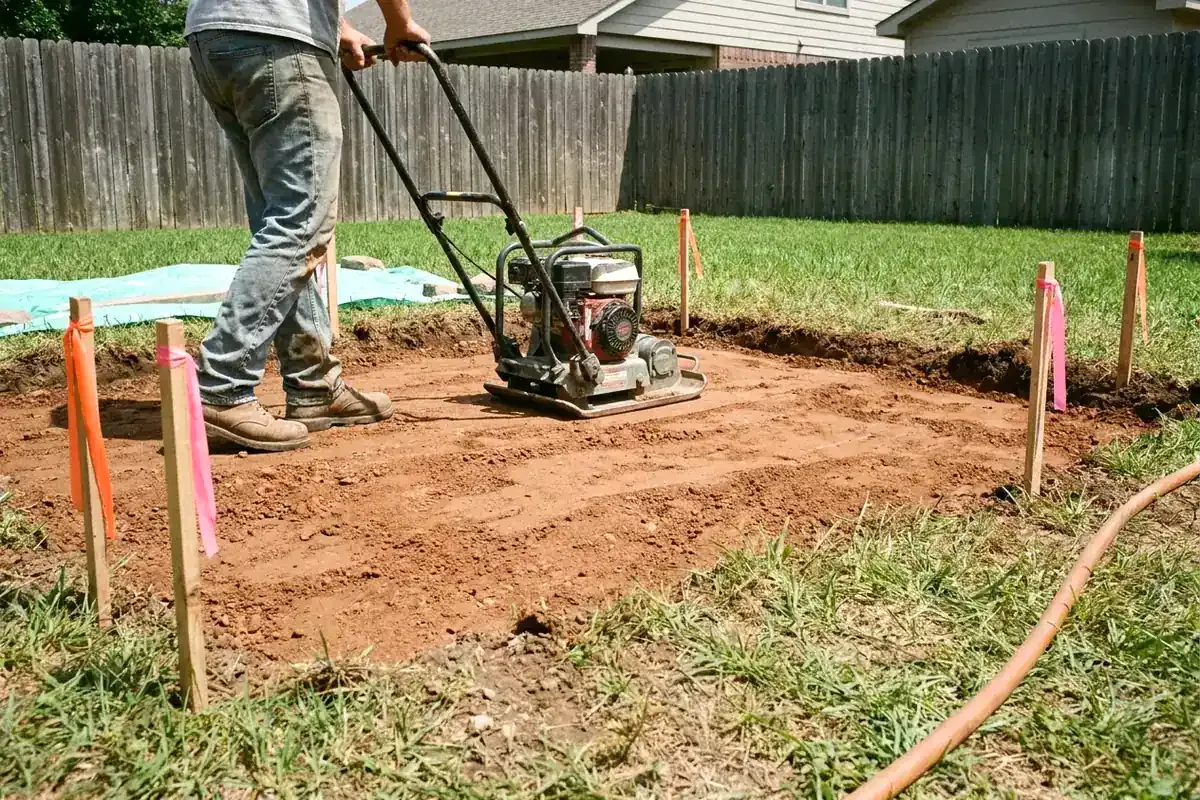
4. Pack it down
They pack each layer to stop the yard sinking later, then the town checks it.
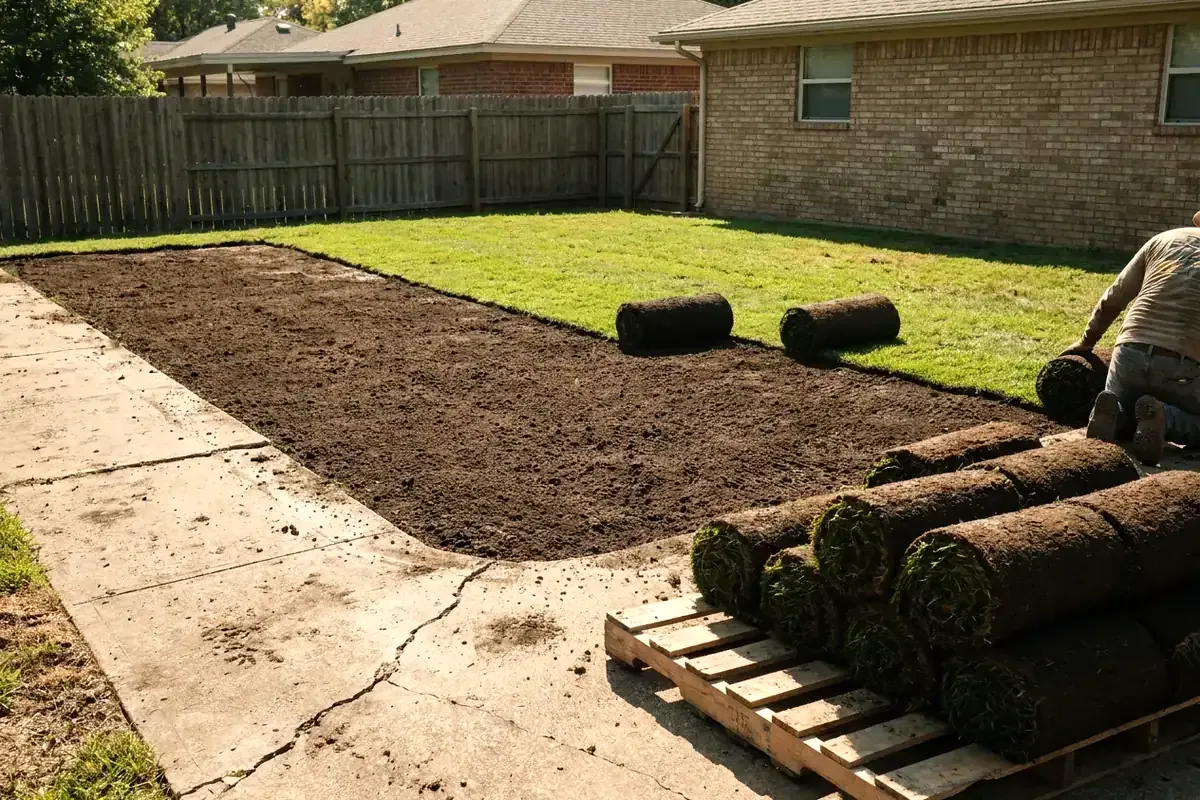
5. Topsoil and grass
Seed or sod goes on top of about 18 inches of topsoil.
How much does the dirt cost?
The dirt makes up only a small share of what you pay overall. Fill dirt gets sold by the cubic yard, which means a cube of material measuring 3 feet on every side.
Take a pool 32 feet long, 16 feet across, and 5 feet down: the whole hole holds roughly 95 cubic yards. That is the most it can take, since broken concrete left in a partial removal fills part of the space, according to HomeAdvisor.
Pool backfill cost by material
Backfill is whatever material brings the empty hole back up to your yard's level. It's priced by the cubic yard, and you order however many cubic yards the hole calls for.
| Fill material | What each cubic yard costs |
|---|---|
| Gravel | $5–$8 |
| Fill dirt | $8–$12 |
| Topsoil | $12–$55 |
The gravel and dirt figures come from Angi, while the topsoil figures come from HomeAdvisor. Want grass growing over that area? Plan on 18 inches of topsoil over the fill, HomeAdvisor says.
Compaction means packing the fill down firmly. Expect it to add roughly $250 to $1,000 to your bill, according to Angi.
Should you go with a partial pool removal?
A partial removal is the faster, cheaper route, but there are trade-offs. When you eventually sell, you have to disclose to buyers that the pool was partly taken out and filled back in, both Angi and HomeAdvisor note this. Certain cities also limit what can go on that spot later.
It's worth being sure before the crew arrives: if you change your mind later, digging a filled-in pool back out costs about as much as building a new one, Angi says.
Check your city's rules first
Each city sets its own requirements, and 2 California cities show just how strict those rules can get.
- Elk Grove: a pool left buried has to be broken out to a depth of at least 18 inches, with two 3-by-3-foot holes punched in the floor. Once that's done, no structure can sit on top of the spot or within 5 feet of the area, the City of Elk Grove explains.
- Los Angeles: a pool fill-in always needs a grading permit, which is the city's written go-ahead to move and place soil. If you might build on the spot later, the fill has to be packed down very firmly and tested to prove it, and the old pool shell has to be hauled away, per the Department of Building and Safety.
Questions homeowners often ask
Does filling in a pool make sense?
It can trim your monthly spending. Pool upkeep runs about $150 to $260 a month, a cost that goes away once the pool is filled in, according to Angi.
Could a filled-in pool bring down my home insurance?
It might. Having a pool can add $50 to several hundred dollars a year to your insurance, Angi reports.
Does removing a pool lower the value of a house?
Most often, no. Selling a house can be harder with a pool, Angi notes, while HomeAdvisor says full removal adds more value than partial removal. To show a buyer, keep the permit and fill or compaction report.
What is the cheapest way to fill in a pool?
The crew breaks off wall tops, punches floor holes, and fills the shell during a partial removal. For a concrete pool, a partial removal starts near $2,500, while taking every piece out runs about $4,000.
Get a crew to look at your yard
The ranges tell you what is usual. Once a crew sees your pool, the access, and the fill, they will give you a real written quote.