
Fill in pool with dirt cost and how many yards you need
Fill dirt is the soil trucked in to fill the hole once a pool is broken out; this calculator prices the materials, not the whole job.
The cost to fill in a pool with dirt starts with the size of the hole.
Pool fill dirt calculator
It calculates the cubic yards and the material's price. Delivery may cost extra. Labor, permits, and pool removal are priced separately.
1 of 6
What shape is the pool?
Measure the longest length and widest width for a kidney or freeform pool.
2 of 6
3 of 6
4 of 6
5 of 6
6 of 6
Is the shell staying or going?
- Whole job, partial removal and fill
- $2,500–$10,000
- Whole job, full removal
- $4,000–$16,000
- Fill dirt, per cubic yard
- $8–$12
- Gravel base, per cubic yard
- $5–$8
- Topsoil, per cubic yard
- $12–$55
Whole-job ranges from Angi; material prices from HomeAdvisor.
Yards of fill by pool size
| Pool size | To order | Material cost | Truckloads | The hole holds |
|---|---|---|---|---|
| 12 x 20 ft | 57 cubic yards | $480–$1,230 | 6 | 51 cubic yards |
| 16 x 32 ft | 121 cubic yards | $1,020–$2,610 | 13 | 109 cubic yards |
| 18 x 36 ft | 154 cubic yards | $1,300–$3,300 | 16 | 138 cubic yards |
| 20 x 40 ft | 190 cubic yards | $1,600–$4,070 | 19 | 170 cubic yards |
The math here covers removing only part of a pool that measures 3.5 to 8 feet deep, the depth used in the example that follows. It starts from the calculator's planning figures and the HomeAdvisor cost for each cubic yard. For figures on your own pool, run the calculator higher up.
Multiply length by width by average depth, then divide by 27, and you have cubic yards.
Add some extra because loose fill packs down, multiply by the price per cubic yard, and allow for a layer of gravel at the bottom so water can drain.
One cubic yard is a cube of earth measuring 3 feet on each side. Suppliers sell and haul dirt, gravel, and topsoil by the cubic yard, most often in full truckloads. Plan on about 20 percent more fill dirt than the hole holds, because loose dirt packs down; that extra does not apply to the gravel or topsoil. The calculator on this page adds that for you, and you can change the figure.
Pool backfill cost
Dirt, gravel and topsoil are priced by the cubic yard. These prices per cubic yard come from HomeAdvisor; only the gravel price is listed as including delivery and pouring.
| Material | Cost per cubic yard | Where it goes |
|---|---|---|
| Gravel | $5 to $8 | Goes in first as a drainage base, so water drains through the broken floor. On its own it packs down poorly, which is why dirt goes on top. |
| Fill dirt | $8 to $12 | The standard fill material. This soil-and-gravel blend compacts without much trouble. |
| Topsoil | $12 to $55 | Goes on top. HomeAdvisor puts grass at 18 inches and other planting at up to 36; your local rules may set a different depth. |
Here's a sample calculation. A pool measuring 32 by 16 feet, with a depth of 3.5 to 8 feet, holds around 109 cubic yards. Once the shell is partly removed, it takes roughly 121 cubic yards of combined gravel, fill dirt, and topsoil to fill. That works out to about 13 truckloads, or around $1,020 to $2,610 in materials alone.
Packing the fill down adds $250 to $1,000, according to Angi. The crew spreads the dirt in layers and tamps each one firm, which is what stops the ground sinking later.
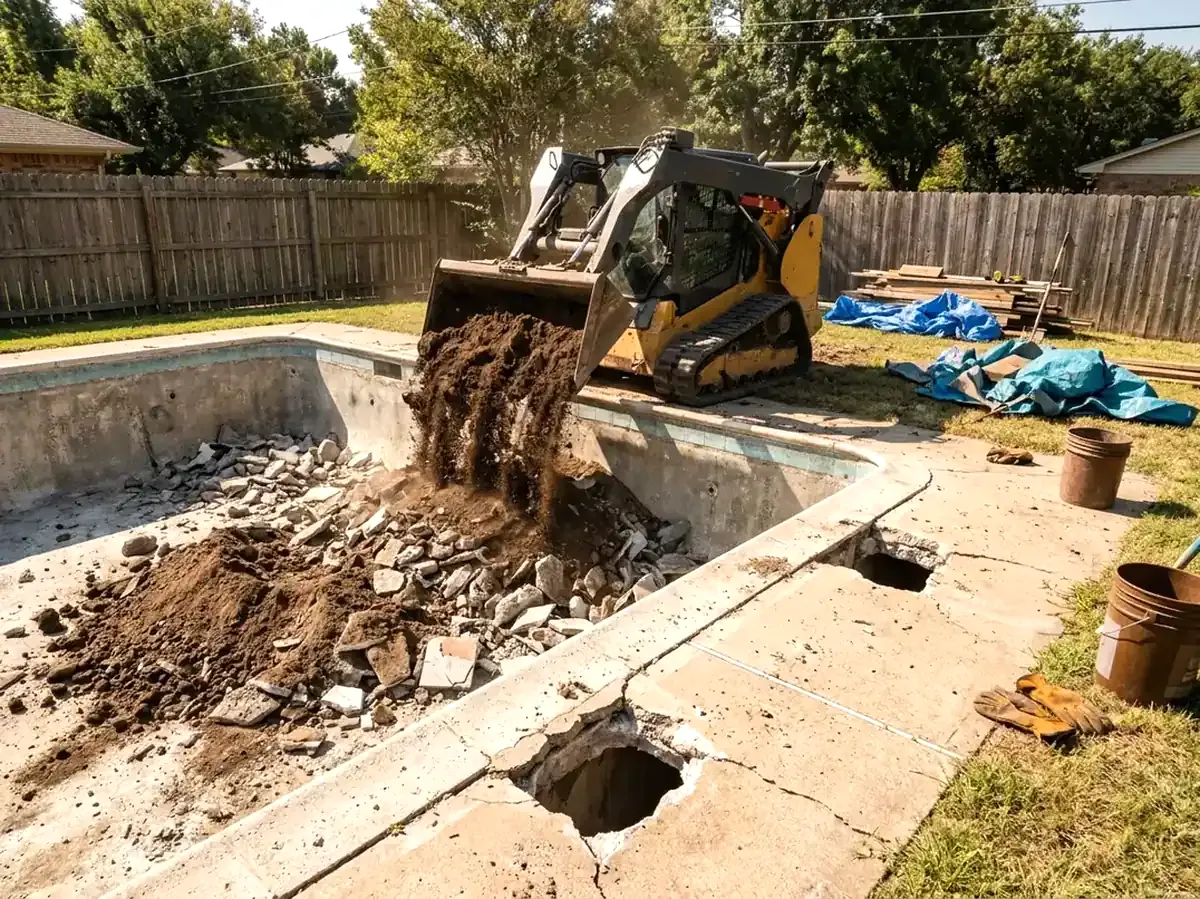
Is it possible to fill in a pool with dirt?
It is, though plain dirt alone usually won't meet the rules. Some local rules specify a gravel base, dirt or sand above it, and planting soil on top, and your local inspector sets the requirements for your pool. Angi also recommends saving space over the fill dirt for the topsoil layer.
The exact layering is up to your city. Orange County, California calls for 12 inches of crushed rock at the base, with the upper 18 inches allowed to be planting soil. Houston won't accept chunks of the broken pool as fill, and an inspector must look at the pool before filling starts.
Pool removal and backfill costs
Angi lists these totals for the full project on an in-ground pool, fill included, and the home page tool shows the range for your state with a button to call a local pool demolition company for a written price.
| Job type | Typical price range |
|---|---|
| Partial removal with fill-in | $2,500 to $10,000 |
| Complete removal | $4,000 to $16,000 |
By "shell" we mean the concrete or gunite bowl that gives the pool its shape. The single biggest factor in what you pay is whether that shell stays buried or gets carted off.
Fill it in
- Time in the yard
- 1–3 days
- Build there later?
- Usually not
- Tell a buyer?
- Yes: the bottom of the pool stays buried. Show the permit and the compaction report.
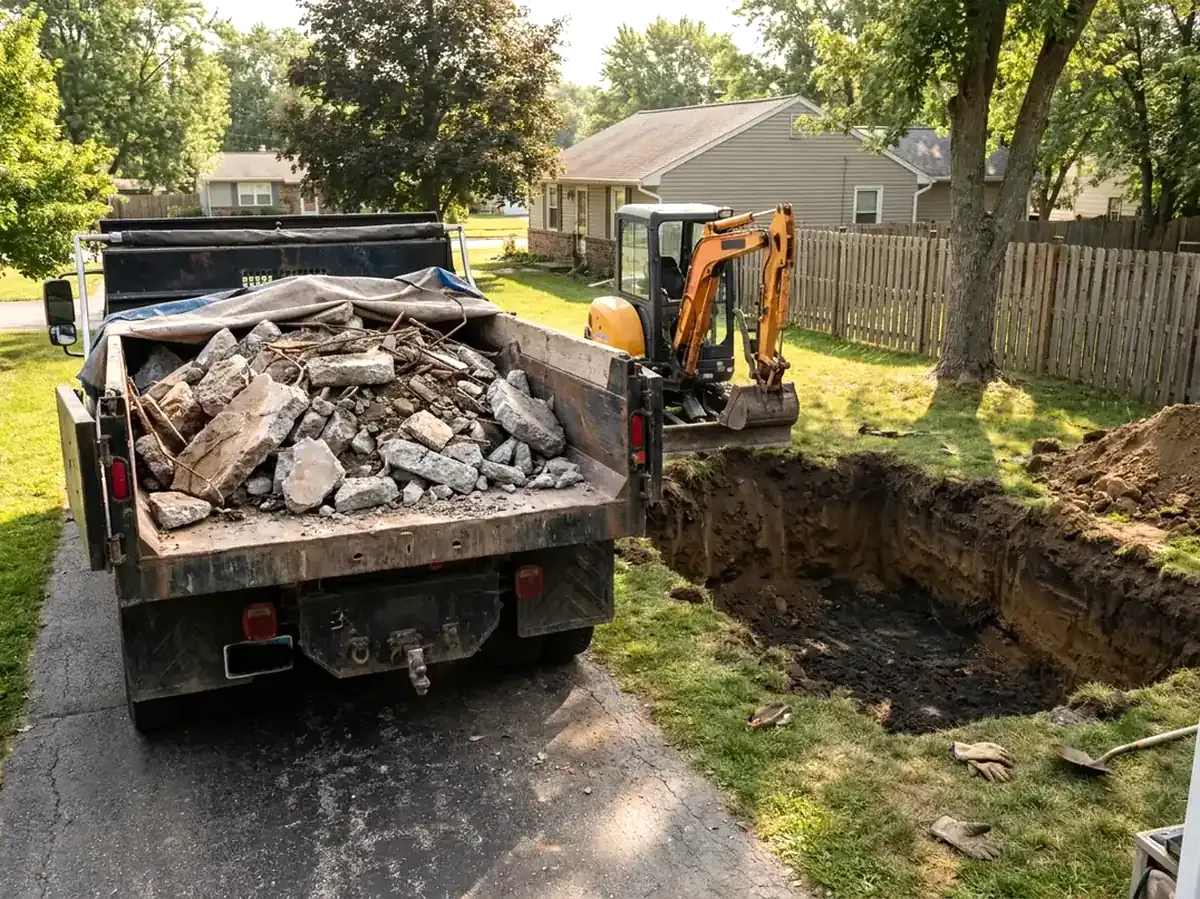
Take it all out
- Time in the yard
- 3–7 days
- Build there later?
- Usually, once the town approves the packed fill
- Tell a buyer?
- Show the permit and the compaction report.
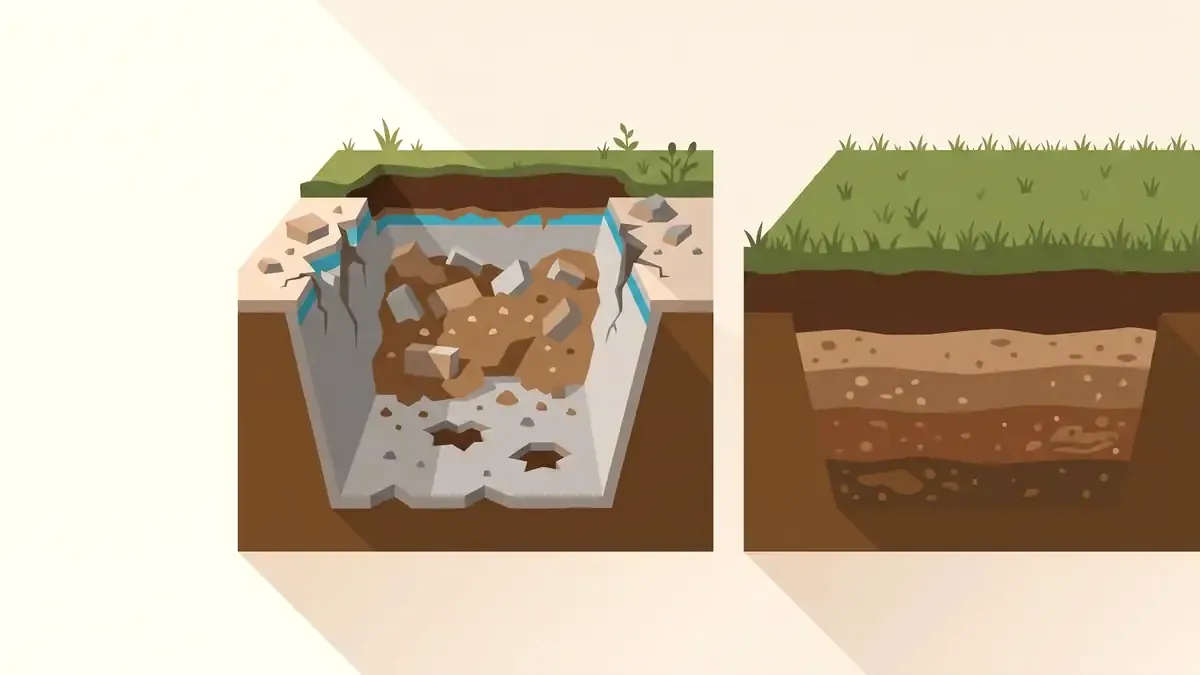
Partial pool removal
With a partial removal, workers cut away the upper 18 to 36 inches of the shell. What remains gets broken up and stays buried. They punch openings in the floor for drainage, then gravel goes into the base.
The City of Brea requires the pool taken down to 2 feet under the final grade. Next comes 12 inches of pea gravel, then fill sand to within 30 inches of the surface, and planting soil for the last 18 inches.
Full pool removal
A full removal means the entire shell gets hauled away. With no shell left to drain through, this calculator leaves out the gravel layer and fills the hole with compacted dirt and topsoil, though your inspector may ask for a different mix. San Diego requires the entire void filled with compacted soil.
Both options begin with the same hole in the ground for a given pool. In this calculator a full removal has no gravel layer, but it still costs more overall, because hauling the whole shell away is the bigger job: Angi puts it at $4,000 to $16,000, against $2,500 to $10,000 for a fill-in.
How this is worked out
The calculator estimates gravel, fill dirt, topsoil, truckloads and material costs for you, adding 20 percent extra fill dirt for compaction, a figure you can change.
The calculator uses the same method HomeAdvisor describes: length times width times average depth, divided by 27. Whatever it shows, your local inspector has the final word on what's required.
Frequently asked questions
How much dirt is needed to fill a 20,000 gallon pool?
A cubic yard holds roughly 202 gallons, which puts a 20,000 gallon pool at about 99 cubic yards. Factor in compaction and you'll need to go beyond that figure.
Is there a required compaction level for a filled pool?
Certain cities do specify one. Lauderdale Lakes requires layers no thicker than 8 inches, each compacted to 90 percent. Houston calls for 12-inch layers compacted to 90 percent at minimum.
Can I build on the spot later?
Only if the fill is compacted and tested. In Los Angeles, fill that will carry a building must reach 90 percent compaction and be checked by an approved soil testing agency. If the pool is left in place and filled without testing, Los Angeles treats that as uncertified fill, so check with the city before planning anything on top of it. Either way, you'll need a grading permit. Orange County requires 90 percent compaction plus a soil report for any fill that will support a structure.
Get a crew to look at your yard
The ranges tell you what is usual. Once a crew sees your pool, the access, and the fill, they will give you a real written quote.